Free intro course · 42 modules · 7 robots
Learn how robots work by making them move.
Free. No account. No hardware. A hands-on course on robotics in plain English, with a real robot to move in every lesson.
Runs in your browser. About 9 minutes of reading a module, and as long as you like with the robot.
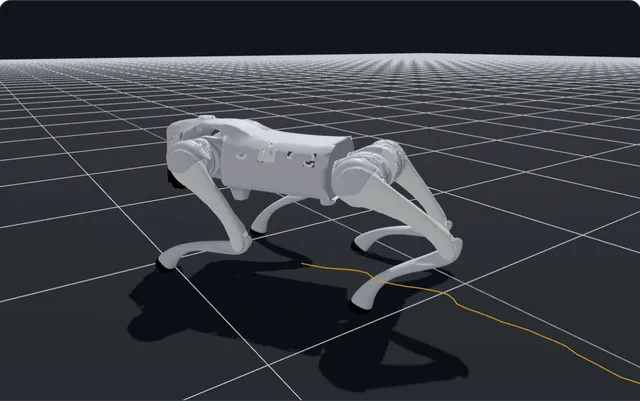
A still of the simulation. Open the robot zoo to drive it.
How a module works
Read it, watch it, then move it yourself.
About nine minutes of reading, a short video, and a robot to play with, in every lesson.
01 · Read
Plain English, one idea at a time
Every technical term is in bold the moment it is explained, and never before.
02 · Watch
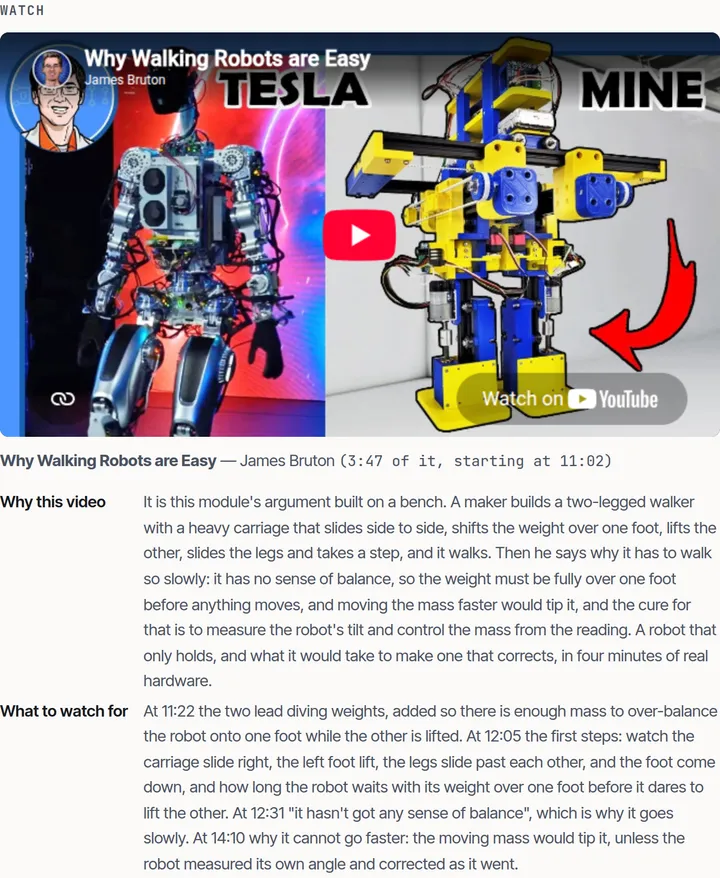
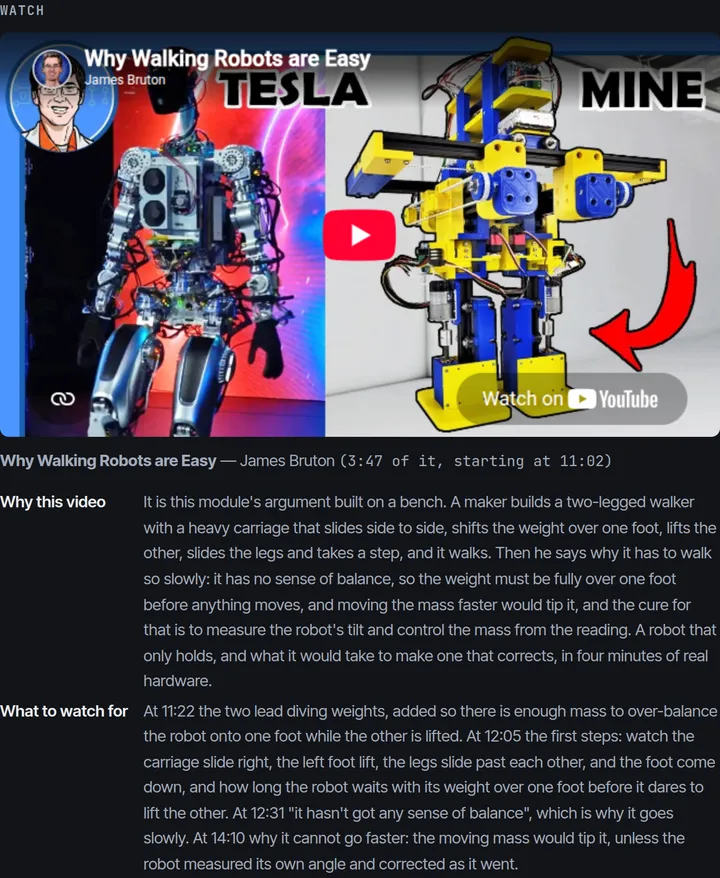
One real robot on video
A few minutes of a real machine doing the thing, with a note on why this clip and what to watch for.
03 · Move
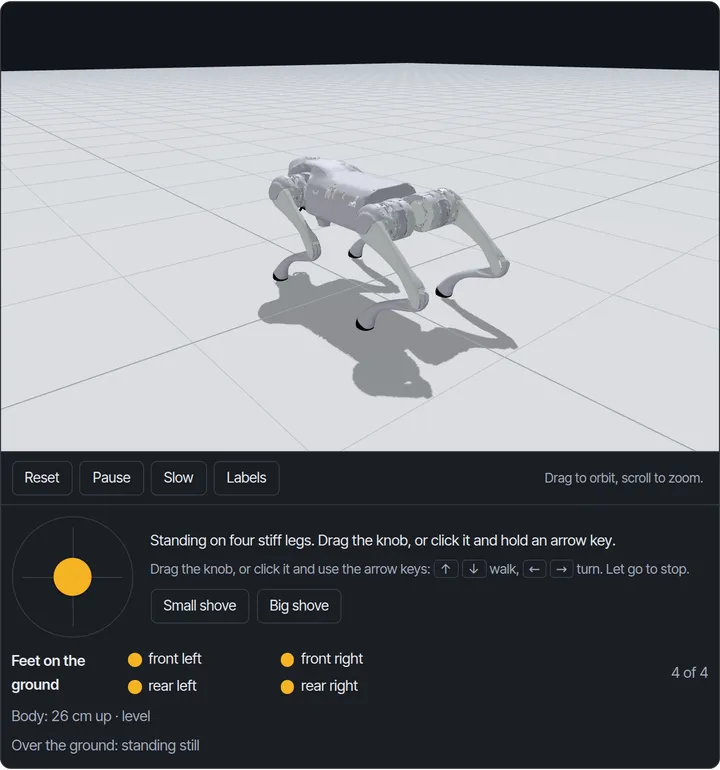
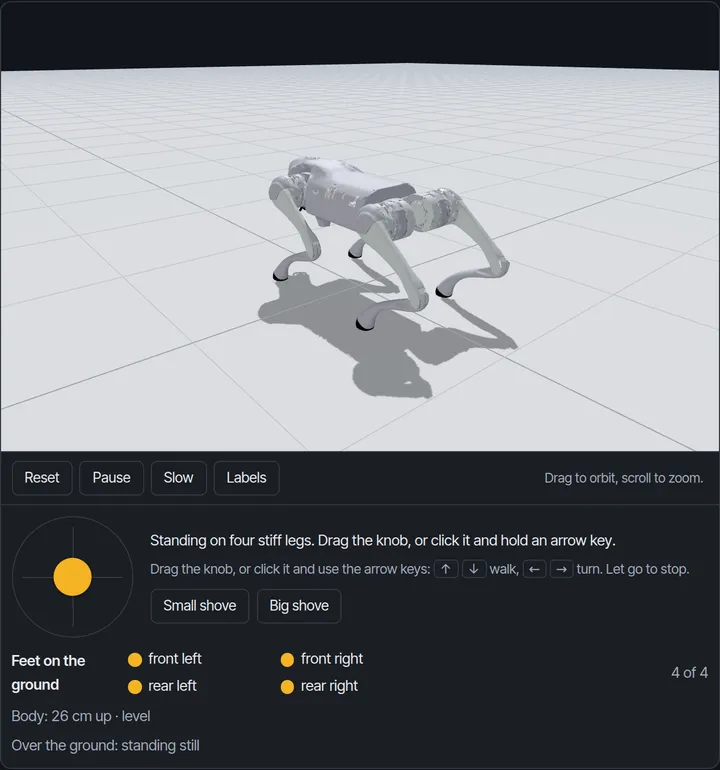
A simulated robot, in the page
A real physics engine runs in your browser. Move the robot, break something, find the edge.
The robots
Multiple interactive robots
Real machines where a real model exists, built for the course where it does not.
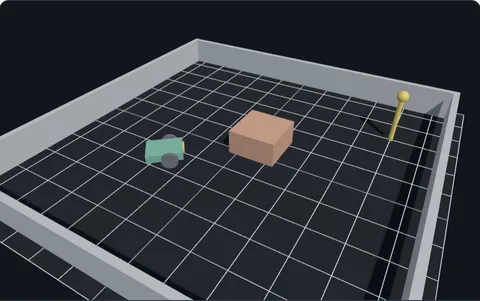
Rover
Modeled for this course
Two wheels, five rangefinders, a bumper and a camera. The first robot the course puts in your hands.
In 14 modules
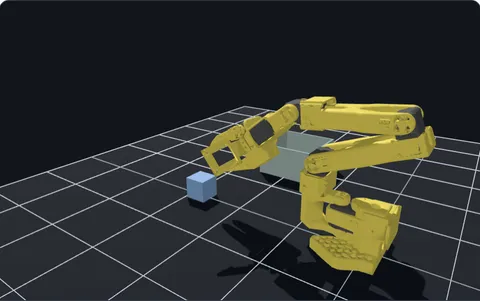
SO-101 arm
SO-101, a 3D-printed arm from TheRobotStudio and the LeRobot project
Six servos, the last one a gripper, on a tabletop. Picks things up and puts them down.
In 19 modules
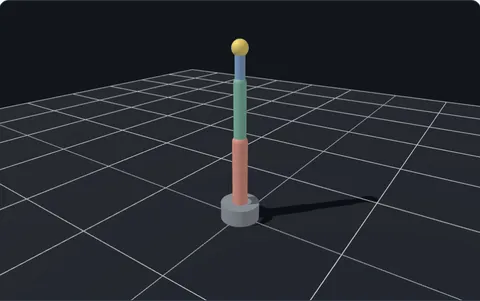
Planar arm
Modeled for this course
Three joints that all swing in one flat plane, so where its hand ends up is simple arithmetic.
In 3 modules
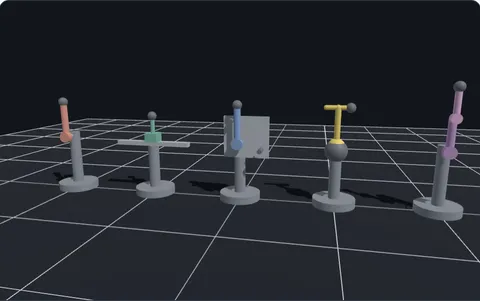
Joint zoo
Modeled for this course
Five kinds of joint on five pedestals, side by side, to move one at a time.
In 1 module
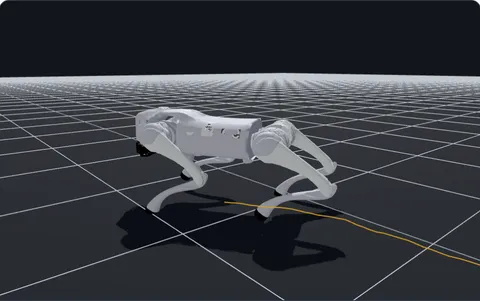
Go2 quadruped
Unitree Go2, from the MuJoCo Menagerie
A robot dog that trots on the arrow keys. Shove it and find out what four stiff legs can hold.
In 1 module
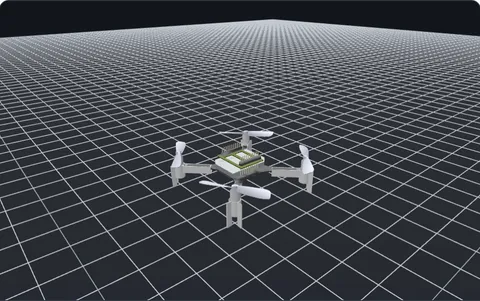
Crazyflie 2 quadrotor
Crazyflie 2, from the MuJoCo Menagerie
A palm-sized drone that cannot stay up for a moment without correcting itself.
In 1 module
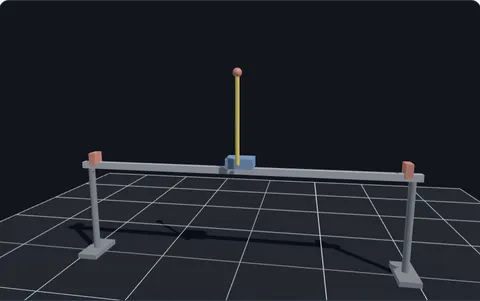
Cart-pole
Modeled for this course
A pole balanced on a motorized cart: the textbook balancing problem, and the robot that learns.
In 3 modules
SO-101 arm, 2 of 7
The course at a glance
7 parts, 42 modules, no prerequisites.
Free intro course
Robotics University: the intro course
From what a robot is to how one learns, one short module at a time. The order is a suggestion; nothing is locked.
- 42 modules
- 7 robots
- 7 parts
- 0 prerequisites
- about 9 min each
- 0What a robot isWhat makes something a robot rather than a machine, what it is built from, and what "it can move six ways" actually means.
- 1How robots moveJoints, reach, motors and wheels. Where the hand is, how to get it somewhere, and why arms sag and rovers turn without a steering wheel.
- 2How robots senseKnowing where your own joints are, feeling a grip, measuring distance, seeing, and being wrong about all of it by a little.
- 3How robots are controlledFeedback: noticing the gap between what you wanted and what happened, and doing something sensible about it without shaking yourself apart.
- 4How robots thinkMaps, knowing where you are on one, planning a way through, and deciding what to do next.
- 5How robots are programmedWriting the loop yourself, how real robot software is put together, and the ways a simulation lies to you.
- 6How robots learnTeaching by showing, learning by trial and error, recognizing what a camera sees, and what language models can and cannot do for a robot today.